
Your car’s exhaust system does much more than reduce engine noise. It safely carries exhaust gases away from the engine and passenger compartment, helps control harmful emissions and can influence how efficiently the engine performs. If part of the system becomes damaged, blocked or worn, you may notice changes in noise, fuel economy, emissions or engine performance.
What Does an Exhaust System Actually Do?
Depending on the make and model of your vehicle, the layout of the exhaust system may vary slightly, but every exhaust system performs the same core functions.
Your exhaust system is designed to:
- Direct harmful exhaust gases safely away from the vehicle cabin
- Reduce engine noise created during combustion
- Lower harmful emissions before gases leave the vehicle
A properly functioning exhaust system helps ensure these gases are directed safely away from the vehicle while emissions-control components reduce pollutants before they leave the tailpipe. Damage or leaks can allow harmful gases to escape in the wrong place, which is why exhaust faults should not be ignored.
Looking after the exhaust is just one part of keeping a vehicle in good condition. Our vehicle maintenance checklist covers other routine checks that can help you spot problems before they become more expensive.
What Are the Main Parts of an Exhaust System?
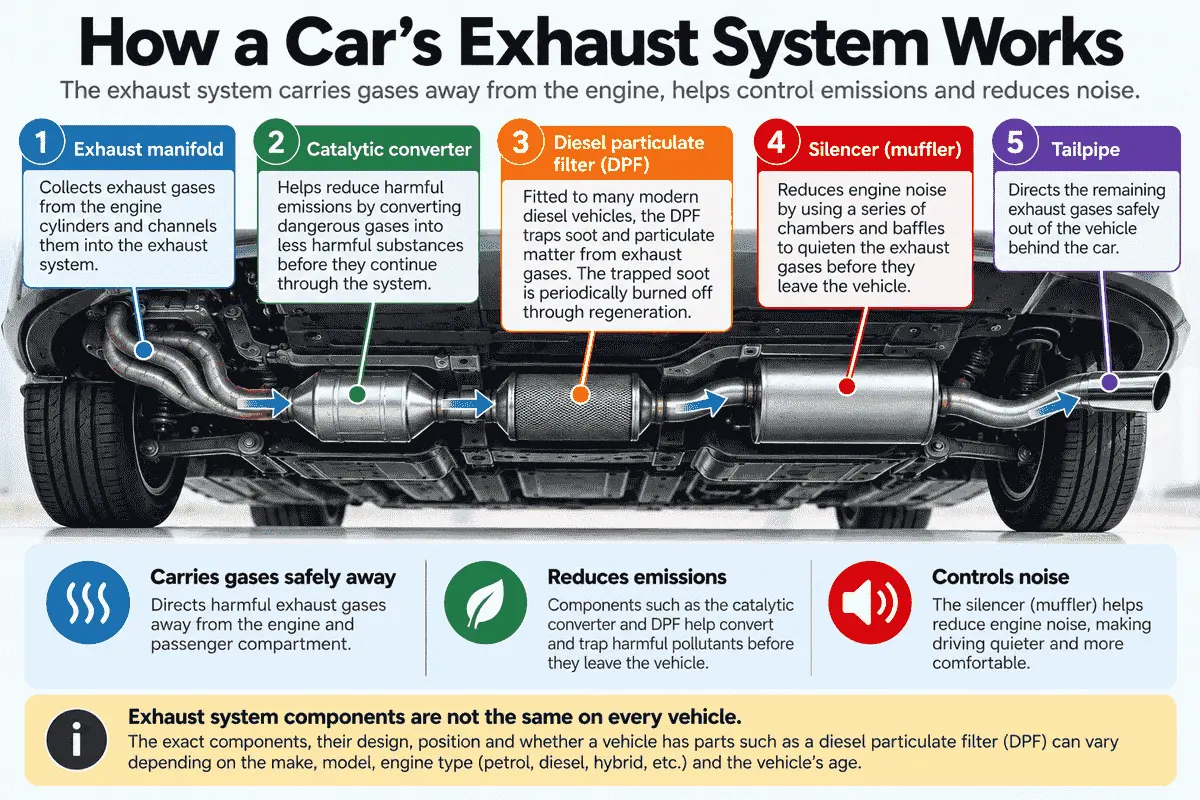
Most drivers only ever see the tailpipe, but the exhaust system runs underneath most of the vehicle and includes several important components.
Exhaust manifold
Connected directly to the engine, the exhaust manifold channels exhaust gases safely away from the engine cylinders and into the exhaust system.
Catalytic converter
The catalytic converter helps reduce harmful emissions by converting dangerous gases into less harmful substances before they exit the exhaust.
Diesel particulate filter (DPF)
Diesel particulate filters (DPFs) are fitted to modern diesel vehicles to trap soot and particulate matter from the exhaust gases. The trapped soot is periodically burned off through a process known as regeneration, helping to keep emissions within required limits.
Silencer (muffler)
The silencer reduces engine noise and helps make driving quieter and more comfortable.
Exhaust pipe
The exhaust pipe carries remaining gases safely out of the vehicle through the tailpipe.
If you’re interested in understanding more about how vehicle components affect running costs and long-term ownership, you might also enjoy some car maintenance and repair advice.
What Can Go Wrong with an Exhaust System?
One of the most common causes of exhaust damage is corrosion and rust. Because exhaust systems are constantly exposed to heat, moisture, salt, and road debris, wear and tear is inevitable over time.
Common exhaust issues include:
- Rust and corrosion
- Cracked exhaust pipes
- Loose brackets or fittings
- Exhaust leaks
- Damaged catalytic converters
- Blocked diesel particulate filters
In more serious cases, exhaust components can become loose or partially detached, while leaks may allow exhaust gases to escape underneath the vehicle. Any significant exhaust damage, unusual fumes or sudden increase in noise should be investigated promptly rather than left to deteriorate further.
How Can a Faulty Exhaust Affect Your Car?
A damaged, leaking or blocked exhaust system can affect much more than the sound of your car. Depending on which component has failed, it can influence engine performance, fuel economy, emissions and even the safety of the people inside the vehicle.
Reduced engine performance
A blocked or restricted exhaust can make it harder for exhaust gases to leave the engine efficiently. This can affect performance and may result in sluggish acceleration or a noticeable loss of power.
Poor fuel economy
If an exhaust fault affects engine efficiency or causes the engine-management system to compensate for incorrect sensor readings, fuel consumption can increase. A sudden unexplained drop in fuel economy can therefore be worth investigating alongside other symptoms.
Increased emissions
Faults involving components such as the catalytic converter, DPF or emissions sensors can increase the pollutants leaving the vehicle and may also trigger an engine or emissions warning light.
MOT failure
Exhaust faults can also cause an MOT failure. Problems such as excessive exhaust noise, significant leaks, insecure components or emissions above the permitted limits can all result in a vehicle failing its MOT test.
Safety risks
Exhaust leaks can allow harmful gases, including carbon monoxide, to escape underneath or potentially enter the passenger compartment. If you can smell exhaust fumes inside the car, treat it seriously: ventilate the vehicle, avoid continuing to drive unnecessarily and have the fault inspected as soon as possible.
Heat damage and safety concerns
Escaping hot exhaust gases or a loose exhaust component can expose nearby parts underneath the vehicle to excessive heat. Exhaust damage can also worsen over time, so cracks, leaks or insecure components should be inspected rather than ignored.
If your vehicle has ongoing problems and repair costs are beginning to add up, our guide to whether you should fix your car before you sell it can help you decide whether repairing it still makes financial sense.
Should You Repair or Replace a Faulty Exhaust?
In many cases, smaller sections of the exhaust system can be repaired or replaced individually. However, temporary repair products often provide only short-term fixes and may not resolve the root cause of the issue.
If the exhaust system is heavily corroded or multiple components are failing, replacing larger sections of the system may be the safest and most cost-effective option long term.
Keeping the exhaust system in good condition helps your car operate as intended, keeps emissions-control components working effectively and reduces the risk of an exhaust-related MOT failure. Addressing smaller faults early may also prevent them developing into more expensive repairs.
The Bottom Line
Your car’s exhaust system plays an important role in controlling emissions, managing noise and allowing exhaust gases to leave the engine safely. When something goes wrong, the symptoms can range from increased noise and warning lights to reduced performance, higher fuel consumption or an MOT failure.
If you notice unusual exhaust noise, fumes inside the car, a loss of performance or an emissions warning light, it is worth having the system inspected before the problem becomes more serious or expensive to repair.
If the cost of repairing your car is starting to outweigh what the vehicle is worth, you can use jamjar to value your car online and see what it could be worth before deciding whether to repair or sell it.