
Tree sap can be surprisingly stubborn once it dries onto your car. Left for too long, it can become harder to remove and may leave marks on the paintwork or clear coat.
The safest approach is to start gently. Wash the affected area first, then move on to a dedicated automotive sap or tar remover if ordinary car shampoo doesn’t shift it. Avoid scraping dried sap from painted surfaces or attacking it immediately with strong household chemicals.
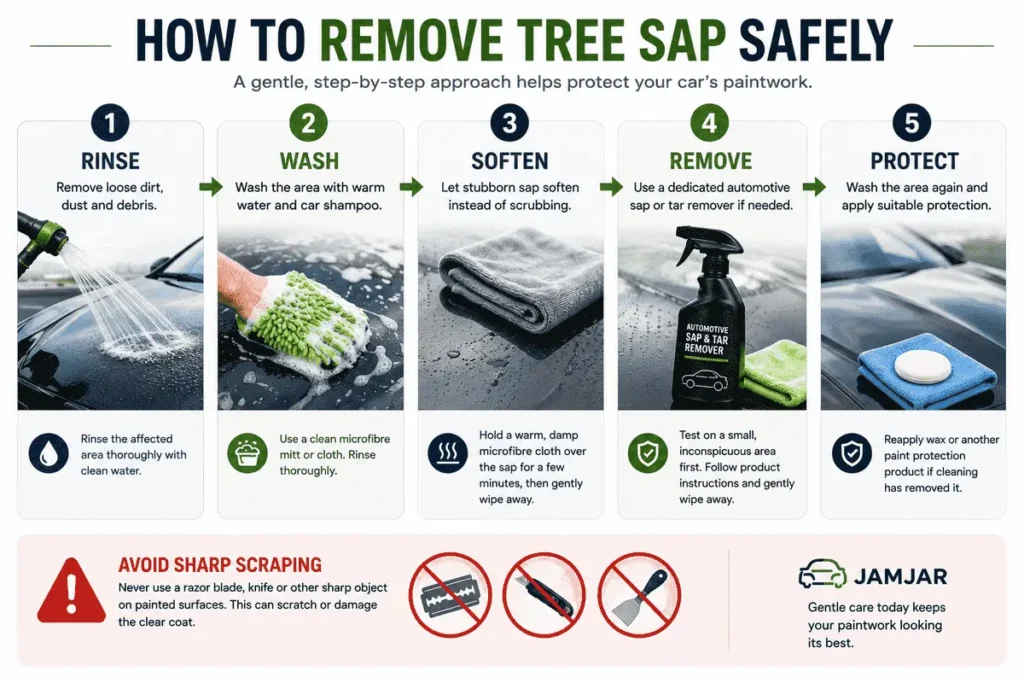
The safest way to remove tree sap from a car is to:
- Rinse away any loose dirt and debris.
- Wash the affected area with warm water and car shampoo.
- Let stubborn sap soften rather than scrubbing it aggressively.
- Use a dedicated automotive sap or tar remover if necessary.
- Wash the area again and apply suitable paint protection afterwards.
Fresh sap is generally much easier to deal with than old, hardened deposits, so it’s worth removing it as soon as you notice it.
For more advice on looking after your car, visit our car maintenance guidance hub.
1. Start with Car Shampoo and Warm Water
If the tree sap is still fresh, ordinary car shampoo and warm water may be enough to remove it. Even with older sap, washing the area first removes dirt and grit that could otherwise scratch the paint while you’re working on it.
Rinse the affected area thoroughly with clean water, then wash it using warm water, car shampoo and a clean microfibre wash mitt or cloth.
If the sap doesn’t lift immediately, don’t scrub harder. Hold a clean, warm, damp microfibre cloth over the affected area for a short time to help soften the deposit, then gently wipe it again.
Rinse the area thoroughly and check the paint. If the sap has disappeared, dry the surface with a clean microfibre towel. If some remains, move on to a dedicated automotive sap remover.
Avoid trying to pick or scrape hardened sap from the paint, as trapped dirt or the sap itself could mark the clear coat.
2. Use a Dedicated Automotive Tree Sap Remover
If car shampoo and warm water haven’t removed the sap, the next step is a product specifically designed for use on automotive paintwork.
Dedicated tree sap removers and suitable automotive tar and adhesive removers are designed to break down stubborn deposits without the need for aggressive scrubbing. Always check that the product is suitable for your car’s particular surface and follow the manufacturer’s instructions.
Before treating a larger area, test the product on a small, inconspicuous section of paintwork first.
Apply the product as directed, usually using a clean microfibre cloth. Allow it enough time to soften the sap, then gently wipe the deposit away rather than rubbing it forcefully.
Stubborn or hardened sap may need more than one treatment. Repeat the process rather than increasing pressure.
Once the sap has been removed, wash and rinse the treated area thoroughly. Some cleaning products can also remove wax or other protective coatings, so you may need to reapply suitable paint protection afterwards.
3. Be Careful with Household Tree Sap Remedies
Search online for ways to remove tree sap from a car and you’ll find plenty of household remedies suggested, including rubbing alcohol, hand sanitiser and products such as WD-40.
Some of these products may soften or dissolve sticky residues, but that doesn’t automatically make them suitable for every vehicle finish. Paint condition, product strength, contact time and existing waxes or protective coatings can all affect the result.
For that reason, we’d recommend trying car shampoo and a dedicated automotive tree sap remover first rather than experimenting with household products on your paintwork.
If you do decide to use an alternative cleaning product, check that it is suitable for automotive paint, follow the manufacturer’s instructions and test it on a small, inconspicuous area before treating the visible deposit.
Never mix cleaning products together, and wash and rinse the treated area thoroughly afterwards.
If the sap has hardened significantly or you’re unsure whether a product is safe for your car’s finish, a professional detailer may be the safer option.
4. Avoid Harsh Scraping Methods
Hardened tree sap can be tempting to pick or scrape away, but using a razor blade, knife, scraper or other sharp object on your car’s paintwork could permanently scratch or damage the clear coat.
Never use a sharp blade or hard scraping tool on painted surfaces.
If your paintwork is already marked, our guide to removing scratches from your car explains what you can do and when a scratch may need professional attention.
Even on glass, take care. Modern vehicles can have coatings, heating elements, sensors or other features around their windows, so check what is safe for the particular surface before using any scraping tool.
If repeated gentle cleaning and a suitable automotive sap remover haven’t worked, don’t keep increasing the pressure or move on to increasingly aggressive chemicals. At that point, having the affected area assessed by a professional detailer is the safer option.
This is particularly important if the sap has been on the vehicle for a long time and the paint underneath already appears stained, dull or discoloured.
Final Thoughts
Tree sap is much easier to remove when it’s dealt with quickly, so try not to leave it sitting on the paintwork for longer than necessary.
Start with the gentlest method: rinse the area, wash it with car shampoo and warm water, and give stubborn deposits time to soften. If that isn’t enough, move on to a dedicated automotive tree sap remover rather than immediately reaching for stronger household chemicals or scraping tools.
Once the sap has gone, wash the area again and consider reapplying wax or another suitable paint-protection product if the cleaning process has removed the existing protection.
If you’re unsure what to use afterwards, our guide to car paint protection options explains the different ways you can help protect your vehicle’s paintwork.
Keeping your car’s paintwork in good condition isn’t only about appearance. Excessive staining, neglected bodywork and other visible signs of poor care can influence how a prospective buyer views the overall condition of a used car.
If you’re thinking about selling and want to understand what your car could currently be worth, you can get a free online car valuation from jamjar.