
If you’re selling a van, it’s common to wonder whether you should strip it back to “standard” first — especially if it has racking, ply lining, roof racks, beacons, or business signage.
The short answer is that it depends on what has been fitted, its condition and who is most likely to buy the van. Useful, professionally fitted equipment can appeal to another tradesperson, while damaged, highly specialised or poorly fitted additions may narrow the pool of potential buyers.
The key is to think like the next owner: would they prefer a clean “blank canvas”, or a van that is already equipped for work?
What Can Make a Van More Appealing to Buyers
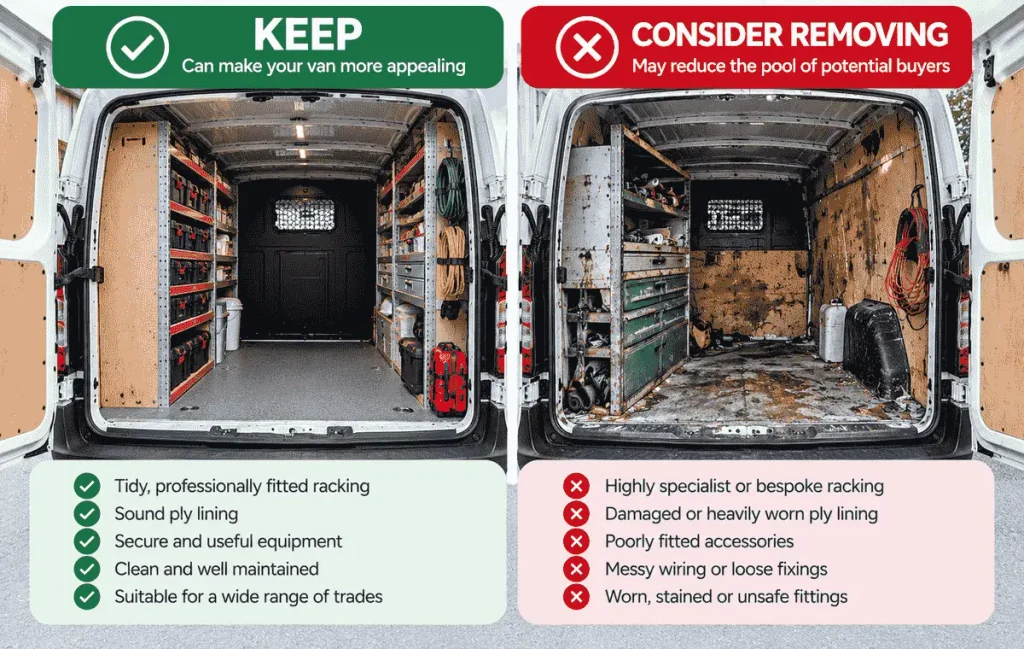
Some additions genuinely make a van more useful, and many buyers will see them as a bonus:
- Ply lining (if fitted well and not damaged)
- Racking (if tidy, solid, and not too specialist)
- Bulkheads (especially if they reduce noise and improve cabin comfort)
- Tow bars (if properly fitted)
- Roof racks / bars (if not rusty or noisy)
For the right buyer, these additions can save the cost and effort of fitting equipment themselves, potentially making your van more attractive compared with a similar unequipped vehicle.
What Can Put Buyers Off (Consider Removing)
Some extras reduce the buyer pool, even if they were useful to you:
- Very specialist racking (e.g., bespoke setups for one trade)
- Damaged ply lining (water stains, broken sections, heavy wear)
- Poorly fitted accessories (loose fixings, rattles, sharp edges)
- Old decals / signage residue that makes the van look neglected
- Aftermarket lighting or electrics that look messy
Heavily worn or poorly fitted additions can make buyers question how the van has been used and what condition may be hidden underneath. Removing or repairing them can therefore improve presentation — provided doing so doesn’t cause further damage to the vehicle.
And if you’re trying to judge how these choices might influence buyer interest overall, our guide to the best time of year to sell a van offers useful insight into when demand peaks and how presentation can affect the buyer interest.
Signage: Remove It, But Do It Properly
Most private buyers don’t want a van with someone else’s branding — and dealers usually prefer it removed too.
If you remove signage:
- Do it cleanly (no torn vinyl, no glue patches)
- Don’t scratch paintwork trying to scrape it off
- If the paint underneath is noticeably different, be prepared for that question
The aim is to leave the van looking clean and professionally presented. Poorly removed graphics, adhesive residue or damaged paintwork can be more off-putting than carefully removed signage.
Should You Remove Racking?
This depends on who is most likely to buy your van:
Keep racking if:
- It’s neat and secure
- It suits common trades (plumber, electrician, builder)
- It doesn’t make the load space awkward or unsafe
Remove racking if:
- It’s extremely trade-specific
- It’s damaged or looks improvised
- It prevents normal use of the load bay
If you do remove it, make sure you don’t leave behind holes, sharp edges or exposed wiring. Think about the type of buyer your van is most likely to attract: a builder or electrician may see good-quality racking as a useful bonus, while someone planning a camper conversion or a completely different commercial use may prefer an empty load area.
Ply Lining: Usually a Positive, Unless It’s Worn Out
Ply lining is usually a plus because it suggests the van’s bodywork has been protected.
However, damaged, mouldy or heavily stained ply lining can have the opposite effect. It may make the load area look neglected and leave buyers wondering about the condition of the bodywork underneath.
For broader advice on preparing a van for sale, visit our van guidance hub.
➡️ Selling a van with damage: things you need to know
The Real Rule: Don’t Spend £300 to Make £50
Before you pay to strip it back, ask yourself:
- Is it making the van harder to sell, or just less “perfect”?
- Would a trades buyer actually prefer it as-is?
- Will the cost and hassle outweigh any uplift?
The aim should be to present the van honestly and in the best condition you reasonably can, rather than spending heavily trying to return it to factory-standard specification. Useful equipment in good condition may be worth keeping, while damaged, highly specialised or poorly fitted additions may be better removed.
Before spending money, consider whether the work is genuinely likely to make the van more appealing or valuable to your likely buyer. Sometimes a thorough clean and good presentation will make more sense than paying to remove perfectly usable equipment.