
When selling a car, buyers expect a few age-related imperfections. What worries them more are problems that suggest the car has been poorly maintained, could be unsafe, or may leave them facing an expensive repair shortly after buying it.
Warning lights, unusual engine or gearbox noises, fluid leaks, worn tyres and gaps in the service history can therefore have a much greater effect on buyer confidence than minor cosmetic damage.
Understanding the difference between a genuine warning sign and normal wear and tear can help you decide what is worth fixing before selling, what should simply be disclosed, and how the condition of your car may affect its value.
For broader advice on running, maintaining, and preparing your vehicle, visit our maintenance guidance hub.
Maintenance issues that concern buyers most
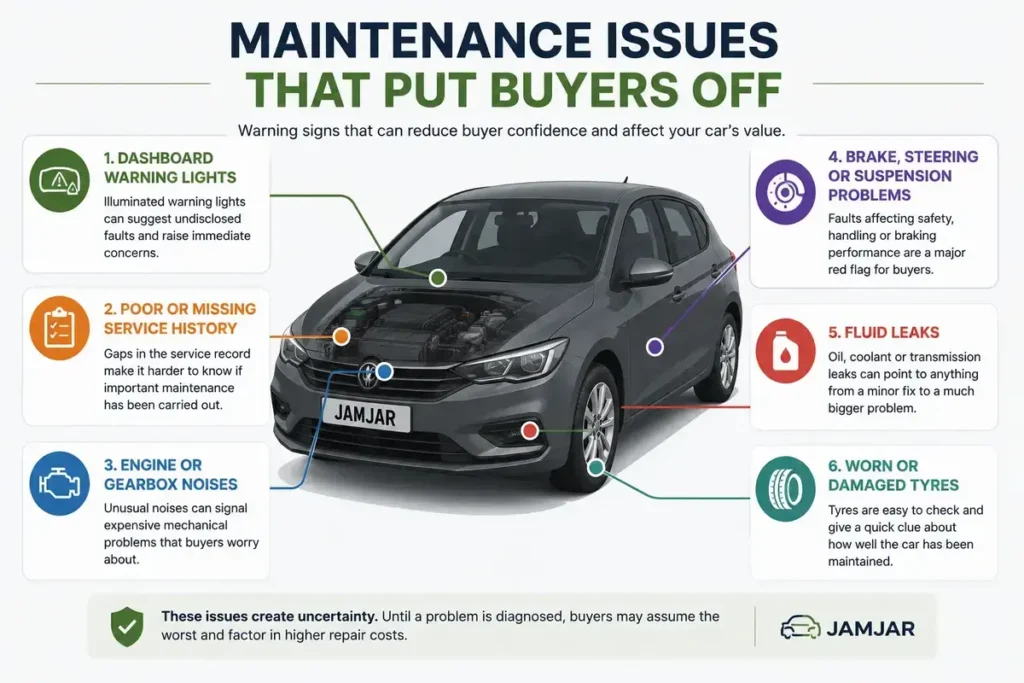
Buyers are usually most concerned by faults that suggest neglect, safety problems or potentially expensive repairs. Some of the biggest warning signs include:
Dashboard warning lights – An illuminated engine management, ABS, airbag or other warning light can immediately raise questions about the condition of the car. Even when the underlying problem is relatively minor, a buyer may assume the worst until the fault has been properly diagnosed.
Poor or missing service history – Gaps in the service record can make it difficult for a buyer to know whether important maintenance has been carried out. This becomes particularly significant for jobs such as timing belt changes, oil services and manufacturer-specified maintenance.
Engine or gearbox noises – Knocking, rattling, grinding or other unfamiliar noises can suggest expensive mechanical problems. A buyer who cannot identify the cause is likely to factor that uncertainty into what they are prepared to pay.
Brake, steering or suspension problems – Pulling under braking, excessive vibration, unusual noises or poor handling can raise both repair-cost and safety concerns.
Fluid leaks – Visible oil, coolant or transmission-fluid leaks can indicate anything from a relatively straightforward seal replacement to a more serious mechanical problem. Either way, an unexplained leak gives a prospective buyer another reason to be cautious.
Badly worn or damaged tyres – Tyres are easy for buyers to inspect and provide an immediate clue to how a vehicle has been maintained. Uneven wear can also suggest possible tracking, suspension or alignment problems.
Individually, some of these faults may be inexpensive to resolve. The difficulty when selling is uncertainty: until a problem has been diagnosed, a buyer may assume that the eventual repair bill will be considerably higher.
Why these issues affect buyer confidence
Most buyers aren’t experts — they rely on visible cues to judge condition.
A car with several unresolved maintenance problems creates uncertainty because the buyer doesn’t know whether they are purchasing a few inexpensive repairs or the beginning of much larger bills.
Buyers may therefore allow for:
- Immediate repair costs after purchase
- The possibility of additional faults that have not yet been identified
- Reduced reliability
- A shorter remaining lifespan for major components
- Evidence that previous servicing or maintenance may have been neglected
This is why a relatively small fault can sometimes reduce an offer by more than the actual cost of repairing it. The buyer isn’t only pricing the known problem — they’re pricing the risk attached to it.
Issues that matter less than buyers think
Not every imperfection needs fixing before you sell. Buyers generally expect an older or higher-mileage car to show reasonable signs of use, and spending money trying to make it perfect doesn’t necessarily increase its value by the same amount.
Less serious examples can include:
- Minor scratches, stone chips and cosmetic wear
- Age-related interior marks
- Small dents that don’t affect the operation of the vehicle
- Older tyres that remain safe and within legal limits
- Minor MOT advisory items that do not represent an immediate safety problem
The important distinction is between normal wear and tear and something that suggests neglect, an impending repair or a safety issue.
Before spending money on cosmetic improvements, consider whether the likely increase in sale value will actually exceed the cost of putting them right.
With so many misconceptions about what really keeps a car in good shape, our guide to common maintenance myths highlights the habits that can end up costing drivers more and putting buyers off.
How to approach selling with maintenance issues
If your car has known faults, you don’t necessarily need to repair everything before selling it. The right decision depends on the seriousness of the problem, the likely repair cost and the value of the vehicle.
A sensible approach is to:
- Diagnose unknown faults where practical. Knowing what is actually wrong removes uncertainty and allows you to make a more informed decision.
- Prioritise safety-related problems. Tyres, brakes, steering and other safety-critical issues deserve particular attention.
- Compare repair cost with likely value gained. Spending £1,000 repairing a problem doesn’t automatically make a car worth £1,000 more.
- Be clear about known faults. Trying to conceal an obvious problem can quickly destroy buyer confidence.
- Price the car according to its condition. An accurately priced car with a disclosed fault can still be attractive to the right buyer.
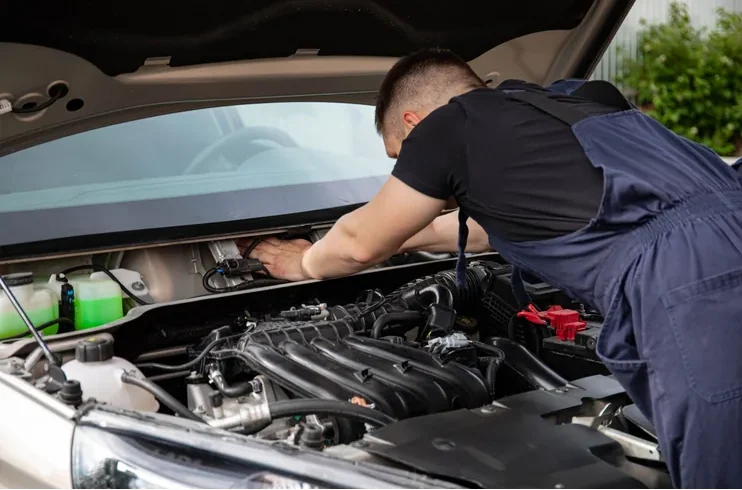
For older or lower-value vehicles in particular, accepting a lower valuation can sometimes make more financial sense than paying for major repairs before selling.
And if you’re wondering whether proper upkeep actually pays off when it’s time to sell, our breakdown of whether regular maintenance increases car value explains how consistent care can boost buyer confidence.
Which problems should you fix before selling?
There isn’t a universal rule because the answer depends on the car’s age, value and condition. A useful starting point is to consider how strongly the problem is likely to affect a buyer’s confidence compared with what it will cost you to put right.
| Problem | Likely buyer concern | Worth investigating before sale? |
|---|---|---|
| Dashboard warning light | High | Yes |
| Brake or steering problem | Very high | Yes |
| Engine or gearbox noise | High | Yes |
| Fluid leak | Medium to high | Usually |
| Missing service records | Medium to high | Gather any available evidence |
| Worn but legal tyres | Medium | Depends on vehicle value |
| Minor scratches or dents | Low | Usually optional |
| Normal interior wear | Low | Usually optional |
Getting a fault diagnosed doesn’t mean you have to pay to repair it. Sometimes simply knowing what the problem is allows you to compare the repair cost with the car’s current value and make a better decision about whether to fix it or sell it as it stands.
When maintenance problems outweigh the car’s value
Major repairs don’t always make financial sense, particularly on an older or lower-value vehicle.
Before committing to an expensive repair, compare:
- The car’s approximate value in its current condition
- Its likely value after the repair
- The full cost of the work
- Whether other significant maintenance is likely to be required soon
For example, spending heavily on a major mechanical repair may be difficult to justify if the vehicle is relatively low in value and will still require tyres, brakes or further maintenance afterwards.
Buyers and professional car purchasers will normally account for repair costs and risk when valuing a vehicle, so its condition can directly affect the price you’re offered.
The important question isn’t simply “Can this be repaired?” but “Does repairing it make financial sense before I sell?”
Key takeaway
Buyers are generally more concerned by maintenance problems that create uncertainty about safety, reliability or future repair bills than they are by ordinary cosmetic wear.
Before selling, concentrate on understanding serious or unexplained faults rather than trying to make an older car perfect. Diagnose problems where practical, prioritise safety-related issues and compare the cost of repairs with the value they are realistically likely to add.
Above all, be clear about the condition of the vehicle. A known problem that has been honestly accounted for is much easier for a buyer to assess than an unexplained warning light, noise or leak.
Head over to our free online valuation tool today to find out how much your vehicle is worth.