
Regular oil checks are one of the simplest and most important vehicle maintenance tasks. Engine oil lubricates moving parts, reduces friction, and helps prevent overheating. If oil levels drop too low, engine performance can suffer and serious damage can occur.
This guide explains how to check your oil level safely and accurately.
For more practical upkeep advice, visit our car maintenance guidance hub.
Before you start
Always check your oil safely to get an accurate reading.
Make sure to:
-
Turn the engine off
-
Park on level ground
-
Allow the engine to cool for around 10–15 minutes
Checking oil while the engine is hot or parked on a slope can give misleading results.
What you’ll need
-
A clean rag or cloth
-
The correct engine oil (if topping up)
-
A funnel (optional but recommended)
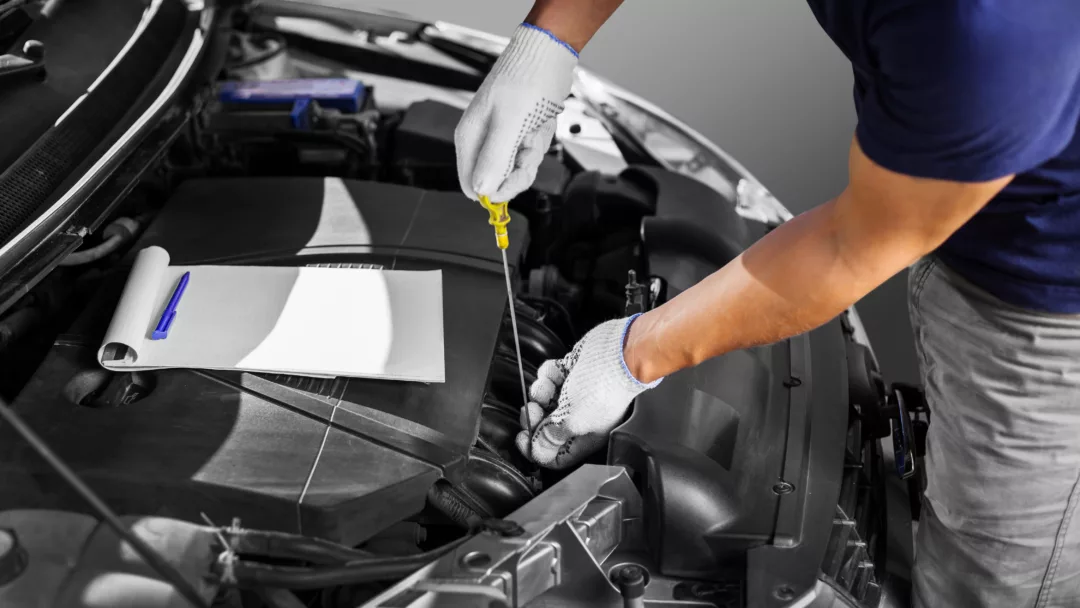
Step 1: Locate and remove the dipstick
Open the bonnet and locate the dipstick. It’s usually clearly marked with a bright handle or loop.
Pull the dipstick out fully and wipe it clean using your cloth. This removes residue from the previous reading.
Step 2: Reinsert and check the oil level
Push the clean dipstick fully back into its tube, then remove it again.
Look at the oil level on the markings at the tip:
-
If the oil sits between the minimum and maximum marks, the level is fine
-
If it’s near or below the minimum mark, the oil needs topping up
You can also observe the oil’s condition. Very dark oil or a strong fuel smell may indicate it’s time for an oil change.
Step 3: Topping up the oil
If oil is low, add the correct type slowly.
To do this:
-
Locate the oil filler cap (usually marked with an oil can symbol)
-
Remove the cap and pour oil in small amounts using a funnel
-
Wait a few minutes for the oil to settle
-
Recheck the level using the dipstick
Avoid overfilling — too much oil can be just as harmful as too little.
Final checks
Once the oil level is correct:
-
Reinsert the dipstick securely
-
Tighten the oil filler cap
-
Wipe away any spills
If you regularly notice low oil levels or warning lights, it may indicate a deeper issue. Our guide on what dashboard warning lights mean explains when problems need attention.
Warning signs to watch for
If oil levels drop too low, your oil pressure warning light may illuminate. Driving with insufficient oil can cause serious engine damage and should be addressed immediately.
If ongoing maintenance costs are becoming a concern, it may be worth reassessing your options before further issues develop. In some cases, choosing to sell your car can be a practical alternative to continued repair costs. If you’re looking to get a value on your car, we’d love to help you with this.
Key takeaway
Checking your oil regularly is quick, simple, and essential for protecting your engine. Staying on top of oil levels helps prevent damage, supports reliable performance, and makes vehicle ownership more predictable.

