
Yes, you can sell a car with outstanding finance, but the finance normally needs to be settled as part of the sale before ownership can be transferred to the buyer.
Exactly how this works depends on the type of finance agreement you have. With agreements such as Hire Purchase (HP) or Personal Contract Purchase (PCP), you’ll usually need to obtain a settlement figure from the finance provider and arrange for the outstanding balance to be cleared.
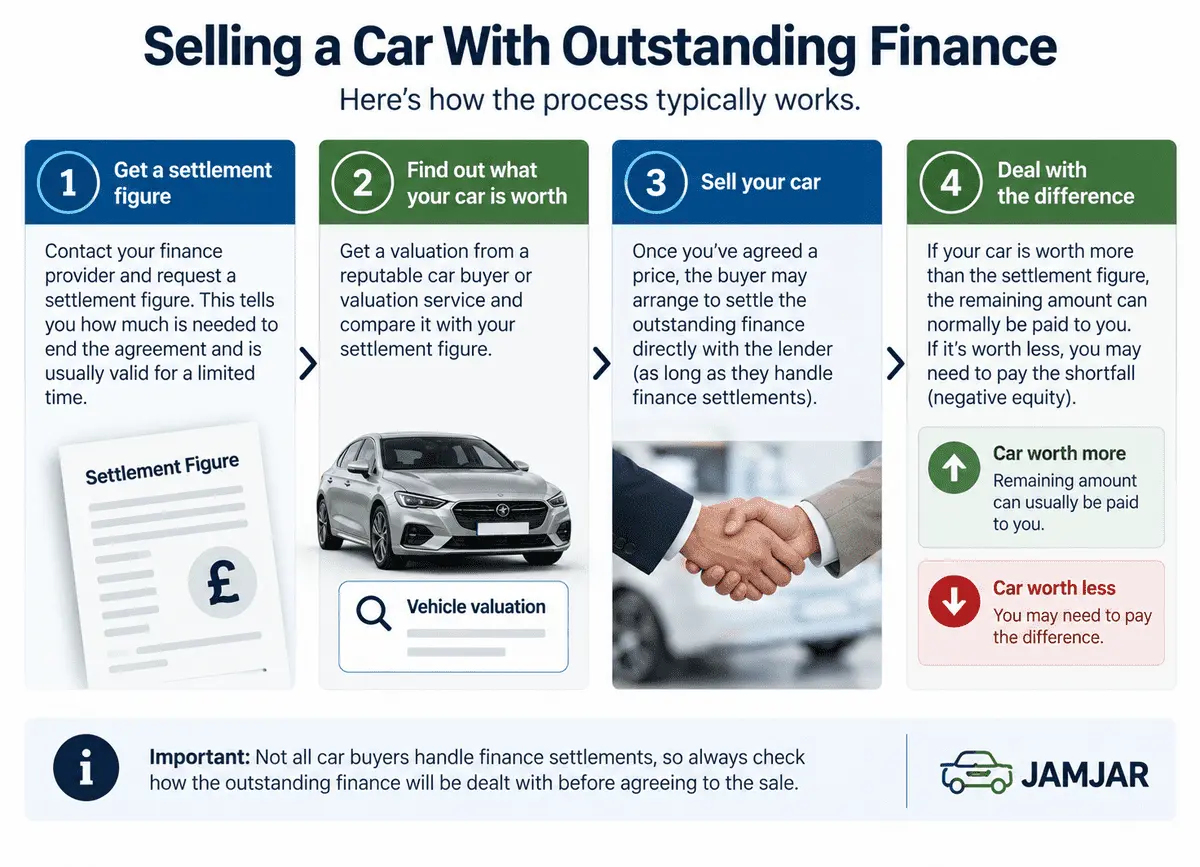
If the car is worth more than the settlement figure, the remaining amount can normally be paid to you. If it is worth less, you may need to pay the difference yourself — a situation known as negative equity.
If you’re planning to sell your vehicle, our car selling guidance hub provides more information about the selling process and what to expect.
Paying Off Outstanding Finance
If your car is on a finance agreement such as Hire Purchase (HP) or Personal Contract Purchase (PCP), you will usually need to settle the outstanding finance before the car can be transferred to a new owner.
The first step is to contact your finance provider and request a settlement figure. This tells you how much needs to be paid to end the agreement early and will normally be valid for a limited period.
Your settlement figure may be different from simply adding together your remaining monthly payments, as early settlement calculations can take account of interest and other terms within your agreement.
Once you know the settlement figure, you can compare it with the current value of your car. If the car is worth more than you owe, you have positive equity. If the settlement figure is higher than the car’s value, you have negative equity and may need to pay the difference.
Some car-buying services can arrange to settle eligible outstanding finance directly with the lender as part of the sale, rather than requiring you to pay it off separately beforehand. Always check how the buyer intends to handle the finance before agreeing to the sale.
Understanding Negative Equity
Negative equity occurs when the amount needed to settle your finance agreement is higher than the current value of your car.
For example, if your finance settlement figure is £15,000 but your car is currently worth £13,000, you have £2,000 of negative equity.
This can happen because cars often depreciate more quickly during the earlier years of ownership, while the outstanding balance on the finance agreement reduces at a different rate.
Negative equity doesn’t necessarily prevent you from selling the car, but the outstanding finance still needs to be dealt with. If the sale price isn’t enough to cover the settlement figure, you would normally need to make up the shortfall.
Before deciding whether to sell, it’s therefore useful to obtain an up-to-date settlement figure from your finance provider and compare it with the current market value of your car.
If reducing your motoring costs is one of the reasons you’re considering a change, you may also want to look at whether selling your car and buying a cheaper one could make financial sense.
Selling Through a Car Buying Service
Using a car-buying service can make selling a car with outstanding finance more straightforward, as some buyers are able to deal directly with the finance provider as part of the transaction.
Once the buyer has confirmed the value of your car and you have provided an up-to-date settlement figure, they may arrange for the outstanding finance to be paid directly to the lender.
If your car is worth more than the settlement figure, the remaining balance can normally be paid to you. If the car is worth less than the settlement figure, you may need to pay the shortfall before the finance can be fully settled.
Before accepting an offer, make sure you understand exactly how the outstanding finance will be handled, whether any payment is required from you, and when the finance provider will confirm that the agreement has been settled.
Comparing offers can also help you understand what your car is currently worth before deciding whether selling it makes financial sense.
Selling a Car Bought With a Personal Loan
If you bought your car using a personal loan from a bank or another lender, the situation is usually different from HP or PCP finance.
With a typical unsecured personal loan, the loan is made to you rather than being secured against the vehicle. This means you normally own the car yourself and can sell it without first settling the remaining loan balance.
Selling the car does not, however, cancel the loan. You remain responsible for making the agreed repayments until the loan has been repaid in full, unless you choose to settle it early.
It’s worth checking the terms of your particular loan agreement before selling, especially if you’re unsure whether the borrowing is secured against the vehicle.
This distinction is important: a car bought using an unsecured personal loan can usually be sold while repayments continue, whereas cars on agreements such as HP or PCP generally require the finance agreement to be dealt with as part of the sale.
Preparing to Sell Your Car
Before selling a car with outstanding finance, it’s worth getting both the finance position and the car itself ready for the sale.
Start by requesting an up-to-date settlement figure from your finance provider. You can then compare this with the current value of the vehicle and understand whether you have positive or negative equity before accepting an offer.
It’s also worth checking the general condition of the car. Make sure it is reasonably clean, remove your personal belongings and gather together useful documents and items such as the V5C, service history, MOT information, spare keys and any relevant receipts or maintenance records.
Minor issues don’t always need to be repaired before selling, particularly if the cost of the work is unlikely to be reflected in a higher offer. However, understanding the condition of the vehicle will help you judge whether an offer fairly reflects what you’re selling.
A well-documented service and maintenance history can also help demonstrate how the vehicle has been looked after, particularly when its condition and value are being assessed.
A well-documented service and maintenance history can also help demonstrate how the vehicle has been looked after, particularly when its condition and value are being assessed.
If you’re gathering the paperwork before selling, it’s worth understanding what counts as proof of a car’s service history and which records can help demonstrate how the vehicle has been maintained.
Final Thoughts
Selling a car with outstanding finance can require a few additional steps, but it is often possible with the right preparation.
Understanding your settlement figure, checking whether negative equity applies and confirming how the transaction will be handled can help ensure the process runs smoothly.
If you want to see what your car might currently be worth, you can get a free, no-obligation valuation through our sell my car service.

