
When you’re buying, owning or selling a used car, having a service history can help show how well the vehicle has been maintained.
But what actually counts as proof?
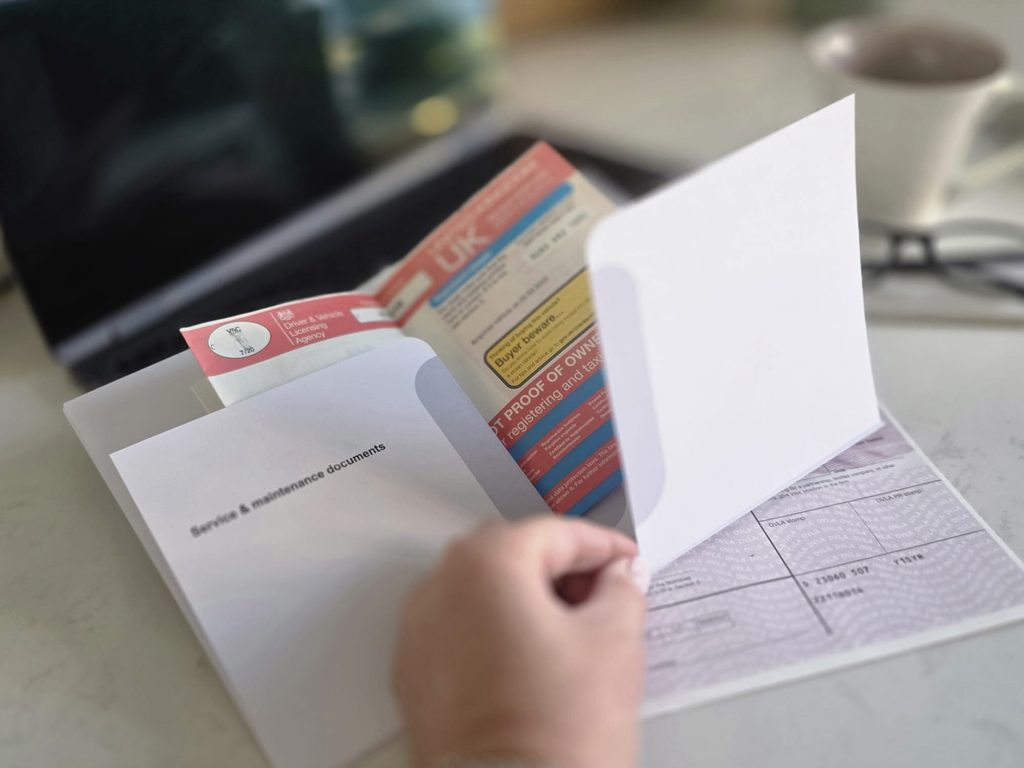
A stamped service book is perhaps the most familiar form of service history, but it isn’t the only evidence worth keeping.
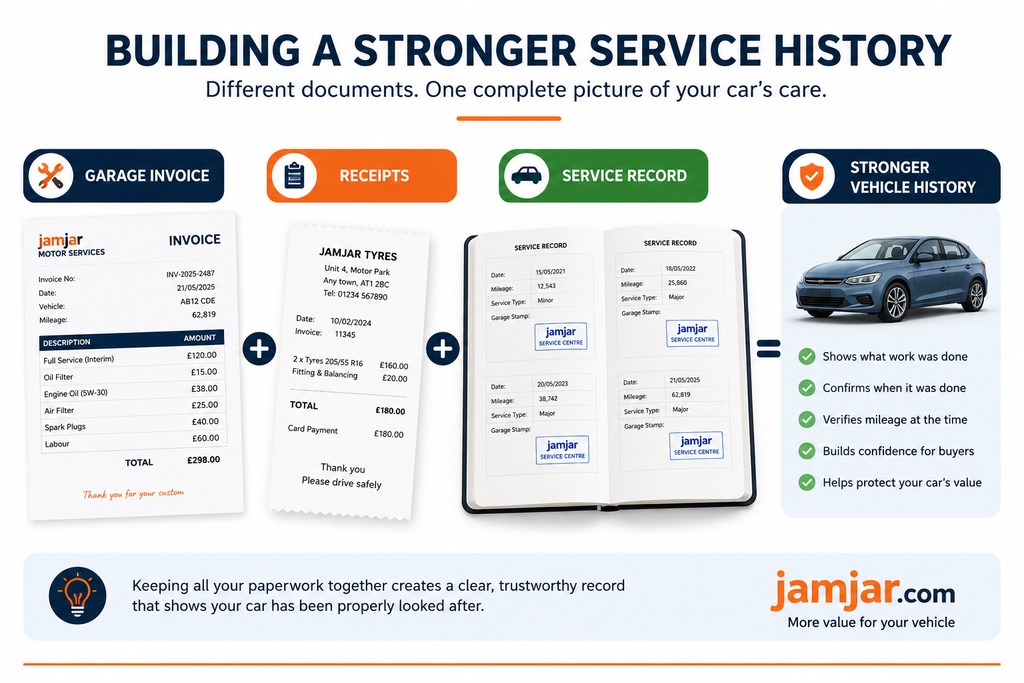
Garage invoices, receipts, digital service records and other maintenance documents can all help build a clearer picture of the work carried out during a car’s life.
In many cases, the strongest service history isn’t a single document at all. It’s a collection of records that support one another.
For more guidance on building and protecting that record throughout your ownership, visit our Service History & Vehicle Records hub.
What can be used as proof of service history?
Several different types of evidence can contribute to a car’s service history.
These can include:
- a stamped or completed service book;
- invoices from garages or dealerships;
- receipts for servicing, maintenance and replacement parts;
- manufacturer or dealer digital service records;
- MOT history and mileage records;
- records supplied by independent garages or specialists.
The important thing is that the evidence helps demonstrate what work was carried out, when it was completed and, where possible, the vehicle’s mileage at the time.
A car doesn’t necessarily need every one of these records to have a useful service history. What matters is the quality and continuity of the evidence available.
Is a stamped service book proof of service history?
Yes. A properly completed service book can provide useful evidence of a car’s servicing history.
A service record will typically show information such as the:
- date of the service
- vehicle mileage
- type of service or work carried out
- garage or dealership responsible for the work
- garage stamp or other confirmation
When entries have been completed consistently throughout the vehicle’s life, the book can provide an easy-to-follow chronological record.
However, a stamp alone doesn’t always tell the whole story.
An invoice from the same service may contain much more detail, including the individual parts replaced, additional maintenance carried out and the amount paid.
This is why keeping supporting paperwork alongside a service book can create a stronger record than relying on stamps alone.
We’ve also looked at whether car service books still matter now that digital service records are increasingly common.
Do garage invoices and receipts count as service history?
Yes. Garage invoices and receipts can be particularly useful because they may provide considerably more detail than a service-book entry.
A good invoice may identify the vehicle, mileage and date while listing the servicing, repairs or replacement parts supplied.
Keeping these documents can help establish not only that the car visited a garage, but what was actually done to it.
Receipts for significant maintenance and replacement items can also contribute to the wider ownership record.
That might include work involving tyres, brakes, batteries, timing belts or other important components.
Not every receipt proves that a scheduled service was completed, so it is useful to distinguish between service history and the vehicle’s wider maintenance history.
But together, those records can create a much richer picture of how the car has been looked after.
What if some of your service history is missing?
A car does not necessarily need a perfect, uninterrupted paper trail for its service history to be useful.
Older vehicles in particular may have changed owners several times, been maintained by different garages or moved between paper and digital service records. An invoice may have been lost, a service book may contain gaps or an earlier owner may simply have failed to keep every receipt.
The important thing is to preserve and organise the evidence that is still available.
If part of the history is missing, useful steps can include:
- checking whether a previous garage or dealership still holds service records for the vehicle;
- looking through old invoices, receipts and MOT paperwork;
- checking whether the manufacturer maintains a digital service record;
- keeping evidence of all future servicing and maintenance from the point you own the car.
A gap in the records cannot simply be recreated, and you should never describe servicing as having been completed unless there is reasonable evidence to support it.
But building a clear record from this point onwards is still considerably better than allowing more of the vehicle’s history to disappear.
How should you keep proof of your car’s service history?
There is no requirement for every piece of evidence to be stored in the same format.
A practical service history might contain a mixture of physical and digital records.
The physical record could include the service book, garage invoices, receipts and other important maintenance paperwork. Digital copies of those documents can provide a useful backup, while manufacturer or dealership records may exist electronically from the outset.
What matters most is that the information can be found, understood and matched to the vehicle.
Where possible, keep records showing:
- the date the work was completed;
- the vehicle’s mileage at the time;
- the garage or service provider;
- what servicing, maintenance or repairs were carried out; and
- any supporting invoice, receipt or service confirmation.
Keeping these records together gradually creates a much clearer chronology of the car’s life.
Our guide to organising your car’s service and maintenance records gives you a practical way to bring those different records together and keep them useful over time.
Why good service-history evidence matters when you sell your car
Service history becomes particularly valuable when the car eventually changes hands.
A prospective buyer cannot see how a vehicle has been treated throughout every year of its life. The records you keep help provide some of that missing evidence.
A well-organised history can make it easier to demonstrate when the car was serviced, what work was carried out and how its mileage developed over time.
That does not mean a folder full of paperwork automatically increases your car’s value, nor does service history guarantee its mechanical condition.
It does, however, give a future buyer something tangible to assess rather than simply asking them to take the seller’s word for it.
And that is really the purpose of service-history evidence.
Build the clearest record you can
There is no single document that proves every aspect of a car’s maintenance history.
A stamped service book can be valuable. So can garage invoices, receipts, manufacturer records and digital service information.
The strongest service history is usually the one where those different pieces of evidence support one another.
Keep what you have. Keep future records carefully. And when work is carried out on the car, record enough information that somebody looking at its history several years from now can understand what happened.
Over time, those individual documents become something much more useful: a credible record of how the car has been maintained throughout your ownership.