When it comes to your car’s value, many drivers wonder whether carrying out repairs will actually increase what the vehicle is worth. While all cars naturally depreciate over time, unresolved faults and damage can reduce the value even further.
The reality is that repairing your car can improve its value in some situations, but it largely depends on the type of repair needed, the age of the vehicle, and how much the work will cost compared to the car’s overall worth.
If you’re unsure how much your vehicle is currently worth, you can find out more within out valuation guidance hub.
Cars with Problems Can Be Harder to Sell
If your car has obvious mechanical problems, warning lights, body damage or faults affecting how it drives, buyers are likely to take the potential repair costs into account when deciding what they are prepared to pay.
Problems can also make a vehicle harder to sell because buyers may worry about:
- Unexpected repair costs
- Vehicle reliability
- Future MOT failures
- Additional maintenance expenses
- The inconvenience of arranging repairs themselves
Fixing relatively small or obvious problems before selling can therefore improve buyer confidence and may help protect your car’s value. However, that doesn’t mean every fault is worth repairing — the cost of putting it right still needs to make financial sense.
Some faults are also more likely to concern potential buyers than others. Our guide to the maintenance issues that put car buyers off the most explains which problems can have the biggest effect on buyer confidence.
It Depends on the Type of Repair
Not all repairs add the same amount of value to a car. The important question is whether the improvement in the vehicle’s condition is likely to justify what you spend.
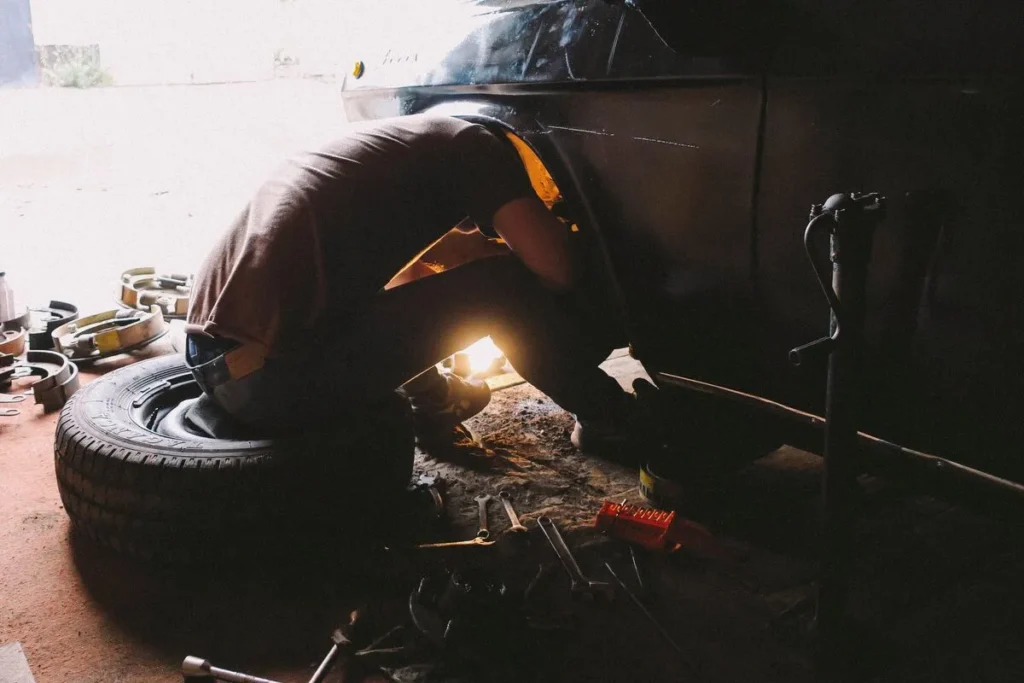
Relatively inexpensive repairs can often be worthwhile, particularly when they remove something a buyer will notice immediately. Examples might include replacing worn tyres, repairing minor bodywork damage, replacing faulty bulbs or fixing straightforward electrical problems.
Major mechanical repairs are different. Common high-cost repairs can include:
- Clutch replacement
- Engine repairs
- Gearbox repairs
- Suspension work
- Significant electrical faults
- Timing belt-related repairs
Spending £1,500 repairing a car does not automatically make the vehicle worth £1,500 more. On an older or lower-value car especially, the cost of a major repair can exceed the additional value you are likely to recover when you sell it.
Before authorising expensive work, compare the likely repair cost with the car’s current value and what it could realistically be worth once repaired.
 Whether a repair is worthwhile can depend on its cost compared with the value it may add to the car.
Regular Maintenance Helps Protect Value
Keeping up with routine servicing and maintenance is one of the best ways to protect your car’s value over the long term. Rather than waiting until something goes wrong, regular maintenance can help prevent smaller problems developing into expensive repairs.
Regular maintenance can help reduce the risk of:
- Long-term engine damage
- Excessive wear and tear
- MOT failures
- Unexpected mechanical problems
- Reduced resale appeal
A well-maintained car can also be easier for a future buyer to assess, particularly when you have records showing when servicing and maintenance work was carried out.
Keeping that evidence together matters too. Our guide to how to organise your car’s service and maintenance records explains how service records, invoices and receipts can help build a clearer picture of how a vehicle has been looked after.
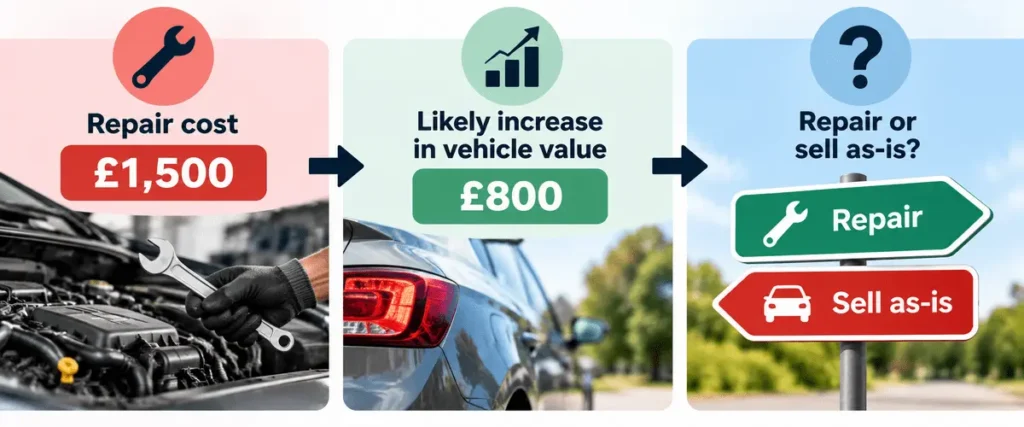 The cost of repairing a car does not necessarily translate into an equal increase in its sale value, so it is worth weighing up the likely return before paying for major repairs.
When Repairs May Not Be Worth It
Sometimes repairing a car before selling simply doesn’t make financial sense. This is particularly true when the vehicle is older, has a relatively low market value or needs several expensive repairs at the same time.
For example, spending heavily on an engine, gearbox or other major mechanical repair may not be worthwhile if the finished car would only be worth slightly more than the total repair bill.
In these situations, your options might include:
- Selling the car in its current condition
- Part exchanging it
- Scrapping the vehicle if its condition and value justify it
- Replacing it with a newer car
Before deciding, compare the cost of the necessary repairs with both the car’s current value and its likely value once the work has been completed.
You may also find our guide to how to improve the value of your car useful for identifying lower-cost ways to make your vehicle more attractive before selling.
Sentimental Value Matters Too
Not every decision about a car comes down purely to money. Some vehicles carry sentimental value, especially family cars or vehicles connected to important memories.
In these cases, owners may decide that repairing the car is worthwhile regardless of the financial return.
However, it’s still important to understand the likely repair costs and how they compare to the vehicle’s current market value before making a final decision.
Get a Free Car Valuation
If you’re deciding whether to repair, sell, or replace your vehicle, getting an up-to-date valuation can help you make a more informed choice.
You can quickly value your car online with Jamjar in just a few steps with no hidden fees or obligation to proceed.


