
Cars have changed enormously over the past few decades. Features that were once completely normal — from manual window winders and cassette players to traditional handbrakes — are steadily disappearing as manufacturers introduce new technology, improve safety and redesign how we interact with our cars.
Modern vehicles now come with digital displays, electronic controls and increasingly sophisticated driver-assistance systems. Many of these developments make cars safer, more efficient or easier to use, but they have also replaced some of the simple mechanical features generations of drivers grew up with.
Some disappeared because better technology came along. Others were affected by changing safety requirements, vehicle design or simply the way motorists use their cars.
Here are ten classic car features that have largely vanished from modern cars — and what replaced them.
If you’re interested in how changing technology and vehicle design can affect what cars are worth, our car valuation guidance hub explains the factors that influence vehicle values.
1. Manual Handbrakes
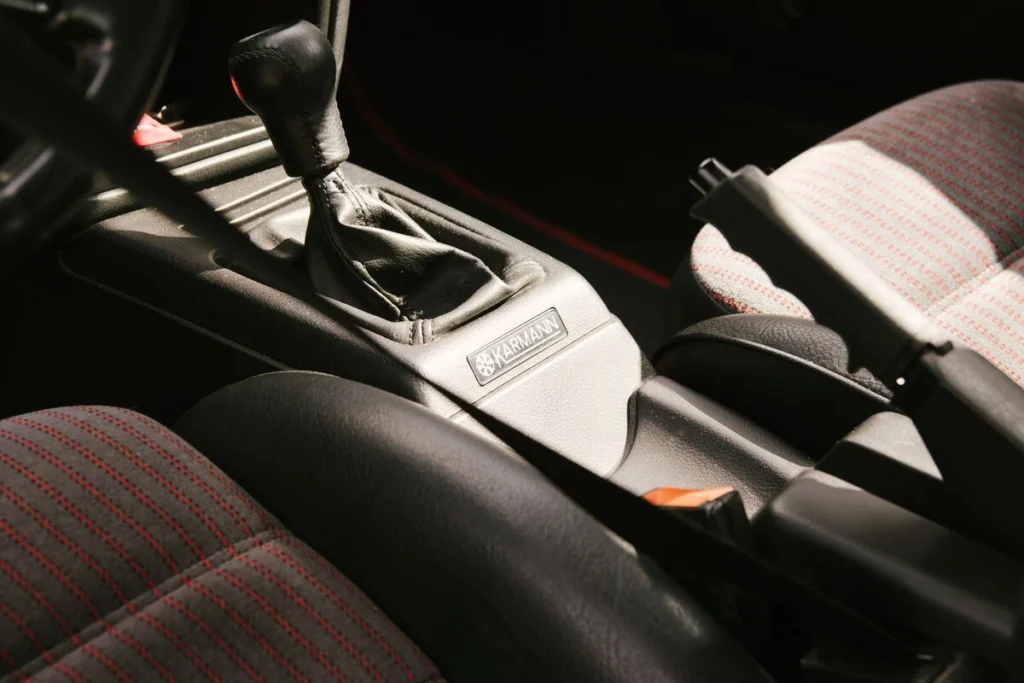
For decades, the traditional handbrake lever was a familiar feature between the front seats. Pulling it mechanically applied the parking brake, giving drivers a simple and very physical way of securing the car.
Electronic parking brakes have increasingly taken its place. Instead of pulling a lever, drivers press a button and the braking system is applied electronically. Many modern systems can also engage automatically when the vehicle stops or work alongside features such as hill-start assistance.
Electronic systems free up space in the centre console and can integrate with other vehicle technology, but some drivers still prefer the simplicity and feedback of a conventional handbrake — particularly those who grew up driving cars fitted with one.
If you’re one of the drivers who still prefers a traditional lever, find out more about why manual handbrakes are disappearing from new cars.
2. Manual Windows
Winding a car window up and down by hand was once completely normal. A simple crank handle on the door operated the window mechanically, with no electric motor, switches or electronic controls required.
Electric windows gradually became more common and are now standard on the vast majority of new cars. At the touch of a button, windows can be opened or closed quickly, while many vehicles also offer one-touch operation and controls that allow the driver to operate every window from their seat.
Manual windows were undeniably basic, but their simplicity had advantages. There were fewer electrical components to fail and, if something did go wrong, the mechanism could often be relatively straightforward to repair.
3. Cassette Players
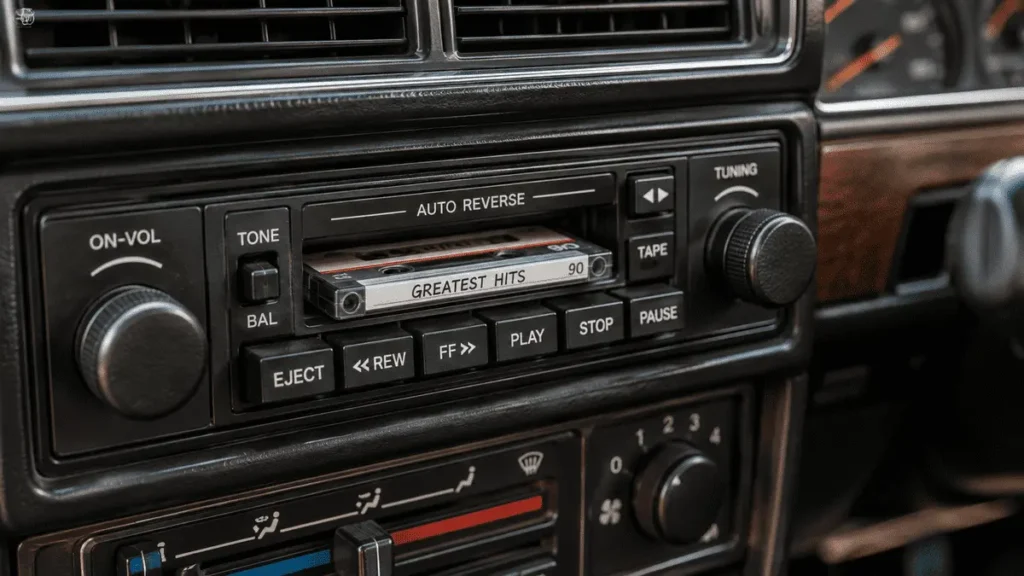
Cassette players were once at the centre of in-car entertainment. Drivers could build their own mixtapes, carry collections of tapes in the glovebox and listen to their favourite music wherever the road took them.
They were gradually replaced by CD players before those, too, began disappearing. Modern cars now rely heavily on Bluetooth, USB connections, smartphone integration and streaming services, giving drivers access to vastly more music without carrying any physical media at all.
The technology is unquestionably more convenient, but cassette players represent an era when choosing the music for a journey involved a little more preparation — and occasionally a pencil to rescue a tangled tape.
4. Pop‑Up Headlights
Pop-up headlights became one of the most distinctive features of sports cars during the 1970s, 1980s and 1990s. When switched off, the lights sat hidden within the bodywork before rising dramatically into position when needed.
Cars including the Mazda MX-5, Toyota MR2 and numerous performance models helped make the design instantly recognisable. As well as looking distinctive, hiding the headlights allowed designers to create low, streamlined front ends.
Changing vehicle design and pedestrian-safety considerations eventually contributed to their disappearance, while advances in lighting technology made it much easier to incorporate compact headlights directly into a car’s bodywork.
Modern LED headlights can now be remarkably slim and sophisticated, but few lighting designs have quite the same sense of theatre as watching a pair of pop-up headlights appear.

5. Full‑Size Spare Tyres
A full-size spare wheel was once a familiar sight beneath the boot floor. If you suffered a puncture, you could replace the damaged wheel and continue your journey with a proper road wheel fitted to the car.
Many modern cars no longer carry one. Manufacturers may instead provide a smaller space-saver wheel, a tyre-repair kit or, on some vehicles, run-flat tyres that can allow limited driving after a loss of pressure.
Removing a full-size spare can reduce weight and free up valuable luggage or packaging space. This has become particularly useful as manufacturers try to improve efficiency and accommodate increasingly complex vehicle components.
The trade-off becomes obvious when a tyre is badly damaged. A repair kit cannot fix every puncture, while space-saver wheels and run-flat tyres come with limitations. For drivers who remember having a proper spare in the boot, its disappearance can therefore feel more like a compromise than an improvement.
6. Ashtrays & Cigarette Lighters
Ashtrays and cigarette lighters were once standard equipment in many cars, reflecting a time when smoking behind the wheel was far more common than it is today.
As attitudes towards smoking changed, manufacturers gradually stopped treating them as essential features. Dedicated ashtrays disappeared from many interiors, while the traditional heated cigarette lighter increasingly gave way to a simple 12-volt power socket.
Even that socket now has competition. USB and USB-C ports are becoming the more familiar way to power phones, sat-navs and other devices, while some newer cars also provide wireless charging pads.
It’s a good example of how a familiar car feature can evolve rather than simply disappear — the electrical connection remains useful, but what drivers use it for has completely changed.

7. Physical Keys
Putting a key into the ignition and turning it to start the engine was once an unavoidable part of driving. Today, physical ignition keys are becoming increasingly uncommon as manufacturers move towards keyless entry and push-button starting.
Modern key fobs can allow the car to recognise when the driver is nearby, unlock the doors and enable the engine to start without the key ever leaving a pocket or bag.
Some manufacturers are taking this further by introducing digital keys, allowing compatible smartphones or other devices to unlock and start the vehicle. This can also make it possible to share temporary or controlled access to a car without handing somebody a conventional key.
Physical keys haven’t disappeared completely, and many keyless fobs still contain an emergency mechanical key. But the familiar ritual of putting a key into the ignition and turning it is becoming much less common in new cars.
8. Analogue Dials
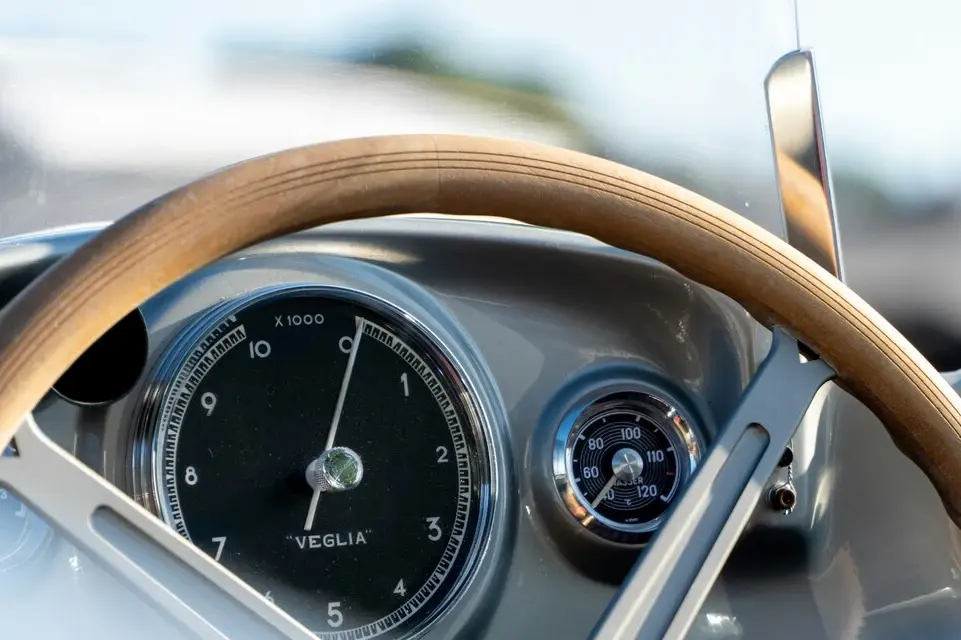
Traditional speedometers and rev counters with physical needles were once a defining feature of almost every dashboard. Drivers could understand the essential information they needed with a quick glance at a set of simple analogue gauges.
Digital instrument displays have increasingly taken their place. These screens can show much more than speed and engine revs, including navigation directions, fuel or battery information, driver-assistance settings and journey data.
Some systems also allow drivers to customise what appears directly in front of them, changing the layout depending on the driving mode or the information they want to see.
Digital displays offer far greater flexibility, but analogue dials still have plenty of fans. Their simplicity, clarity and distinctive designs helped give many older cars an interior character that can be difficult to reproduce on a screen.
9. CD Players
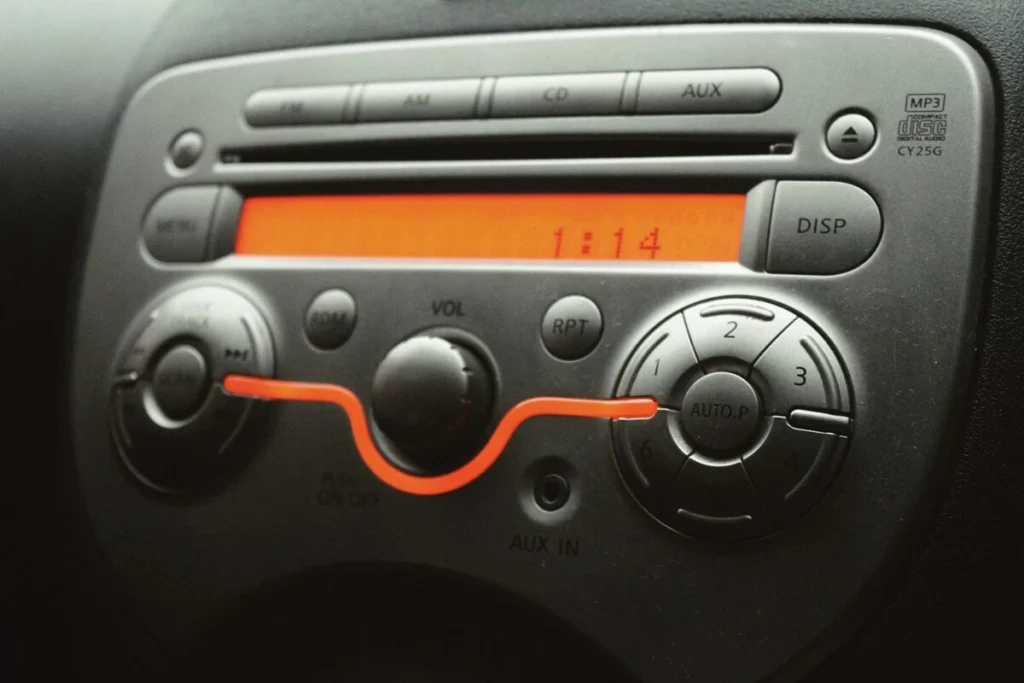
CD players took over from cassette decks during the 1990s and 2000s, offering better sound quality and allowing drivers to carry their favourite albums without worrying about tangled tapes.
For a time, increasingly sophisticated systems even included multi-disc changers, allowing several CDs to be loaded at once. But the arrival of smartphones, Bluetooth and music-streaming services eventually made carrying physical music in the car unnecessary.
Most modern cars now connect directly to a phone through Bluetooth, Apple CarPlay or Android Auto, giving drivers access to huge music libraries, podcasts and other audio without inserting a disc.
CD players haven’t vanished from every car on the road, but finding one fitted to a brand-new model is becoming increasingly unusual — another once-essential piece of dashboard equipment being replaced by digital technology.
The change has now gone even further, with new-car CD players becoming increasingly difficult to find. Read more about why the car CD player has reached the end of the road.
10. Built-In Sat Navs
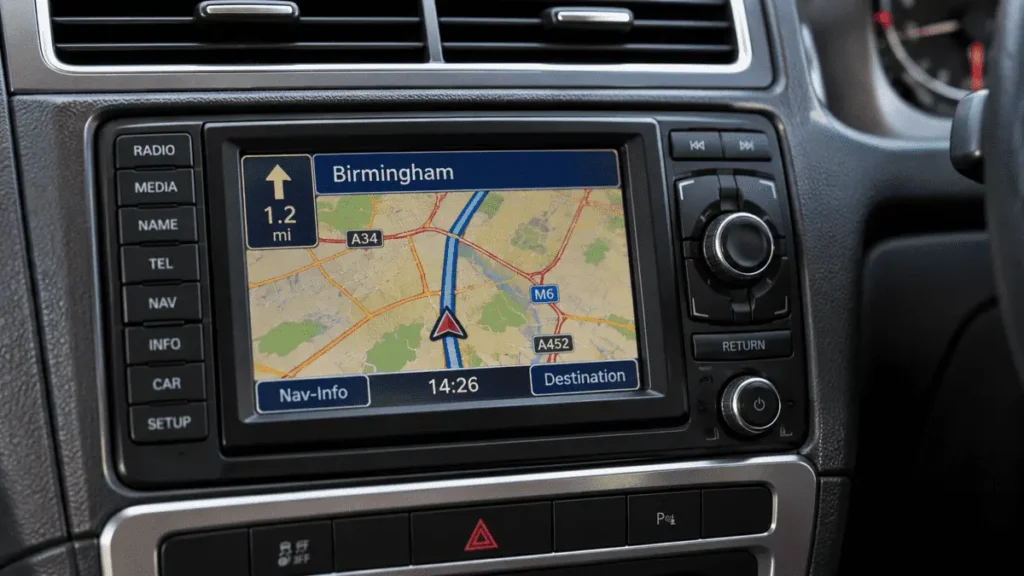
Built-in satellite navigation was once a desirable piece of technology, particularly when it replaced the need for paper maps or a separate portable sat-nav stuck to the windscreen.
Many modern cars still offer integrated navigation, but smartphones have changed how drivers find their way around. Apps such as Google Maps, Apple Maps and Waze can provide live traffic information, route changes and regularly updated mapping directly from a phone.
Smartphone integration through Apple CarPlay and Android Auto has made this even easier, allowing compatible navigation apps to appear on the car’s infotainment screen and be controlled through the vehicle itself.
Manufacturers haven’t abandoned built-in navigation altogether, particularly as it can be integrated with features such as digital instrument displays and electric-car route planning. But for many drivers, the smartphone has become their primary navigation system.
Do Disappearing Car Features Affect Vehicle Value?
New technology doesn’t automatically make an older car less desirable. Features, specifications and equipment can all influence a vehicle’s appeal, while some discontinued features may even be particularly desirable to buyers looking for a certain model or driving experience.
Ultimately, a car’s value depends on a much wider combination of factors including its age, mileage, condition, service history, specification and current market demand.
If you’re curious about what your vehicle is worth today, use jamjar’s free car valuation tool to get an up-to-date valuation.