
Keeping your car’s service and maintenance records organised might not seem particularly important when you’re simply paying an invoice and driving home from the garage.
Years later, those individual documents can become much more valuable.
Service records, garage invoices, receipts, MOT information and details of repairs can help create a clear history of what has happened to your vehicle throughout your ownership.
The problem is that this information can easily become scattered between a service book, glovebox, email inbox, garage systems and piles of paperwork at home.
Creating a simple system for keeping everything together makes your vehicle’s history easier to understand, easier to maintain and much easier to produce when you eventually need it.
What car service and maintenance records should you keep?
You don’t need to keep every piece of paper associated with your car forever, but records that help demonstrate its maintenance and ownership history are worth retaining.
These can include:
- completed service-book entries;
- garage service invoices;
- receipts for repairs and replacement parts;
- digital service-history records;
- MOT certificates and related paperwork;
- tyre, brake and battery replacement records;
- invoices for significant mechanical work;
- warranty or manufacturer repair documentation.
The objective isn’t simply to accumulate paperwork.
It is to preserve enough information to answer three useful questions:
What was done to the car?
When was it done?
What was the vehicle’s mileage at the time?
When those details are recorded consistently, individual documents begin to form a useful chronological history of the vehicle.
Should you keep paper or digital service records?
Ideally, both.
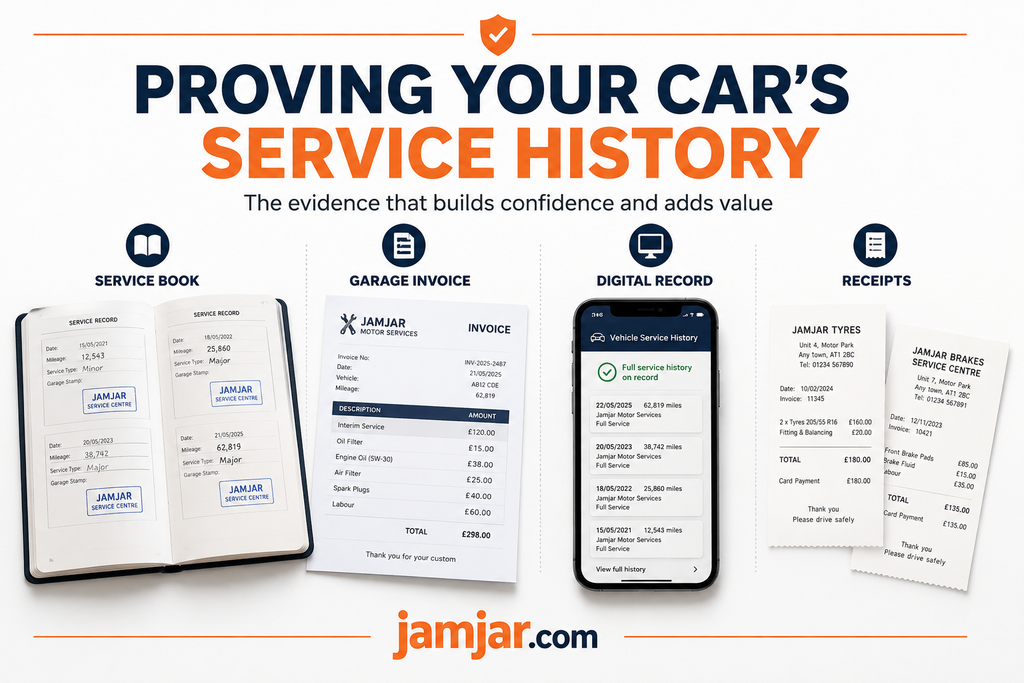
Paper records remain useful because original invoices, receipts and completed service-book entries can provide straightforward evidence of work carried out on the vehicle.
But physical paperwork can also be lost, damaged or accidentally thrown away.
Creating digital copies gives you a useful backup.
You could photograph or scan important documents and store them in a clearly labelled folder on your computer or cloud storage. A simple folder structure organised by year can make records much easier to find later.
For example:
- 2026 – Annual Service
- 2026 – Front Tyres
- 2027 – MOT and Repairs
- 2027 – Annual Service
The digital copy does not necessarily replace the original document. Instead, it gives you another way of preserving and finding the information if the paper version is unavailable.
Manufacturer and dealership service histories may already be stored digitally, so your overall vehicle history can eventually contain information from several different places.
Keep one simple service record for your car
Even if your supporting evidence exists in several formats, keeping one central record can make your car’s maintenance history much easier to follow.
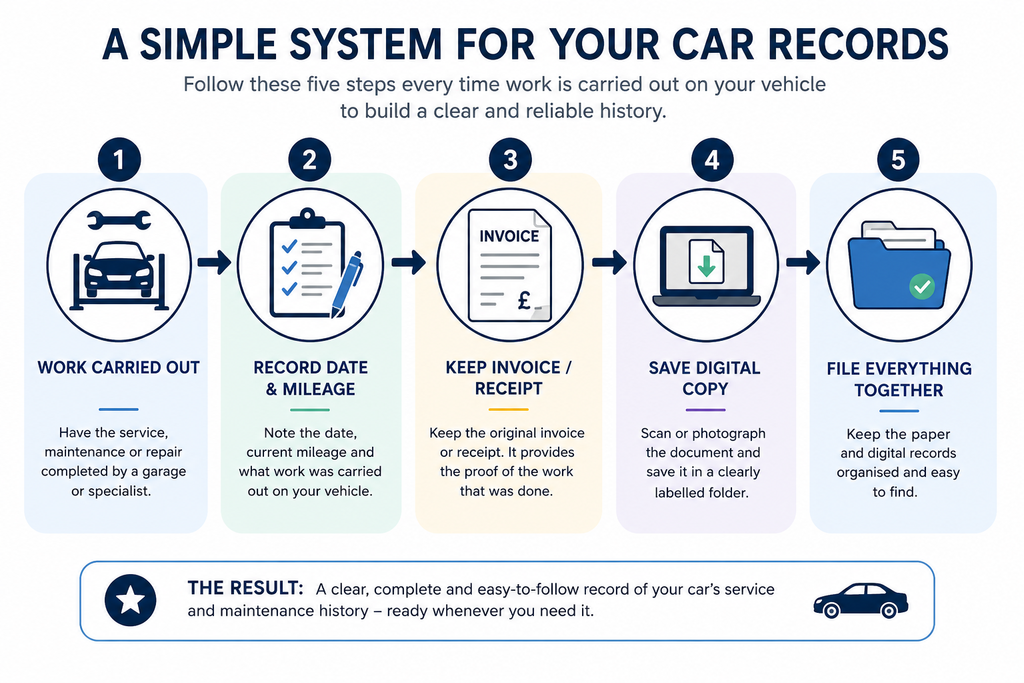
Each time the vehicle is serviced or important maintenance is carried out, record the date, mileage, garage and work completed.
Then keep the supporting invoice or receipt with your vehicle records.
This gives you something much simpler than searching through years of paperwork whenever you want to know what has previously been done to the car: one chronological record of its service and maintenance history, backed up by the original evidence.
That’s exactly why we created the jamjar Vehicle Service & History Record.
It’s deliberately simple. Record the important details as work is completed, then keep the relevant service bills, invoices and receipts with your vehicle paperwork.
No complicated system. No trying to reconstruct the car’s history years later.
Just a clear record that grows with the vehicle.
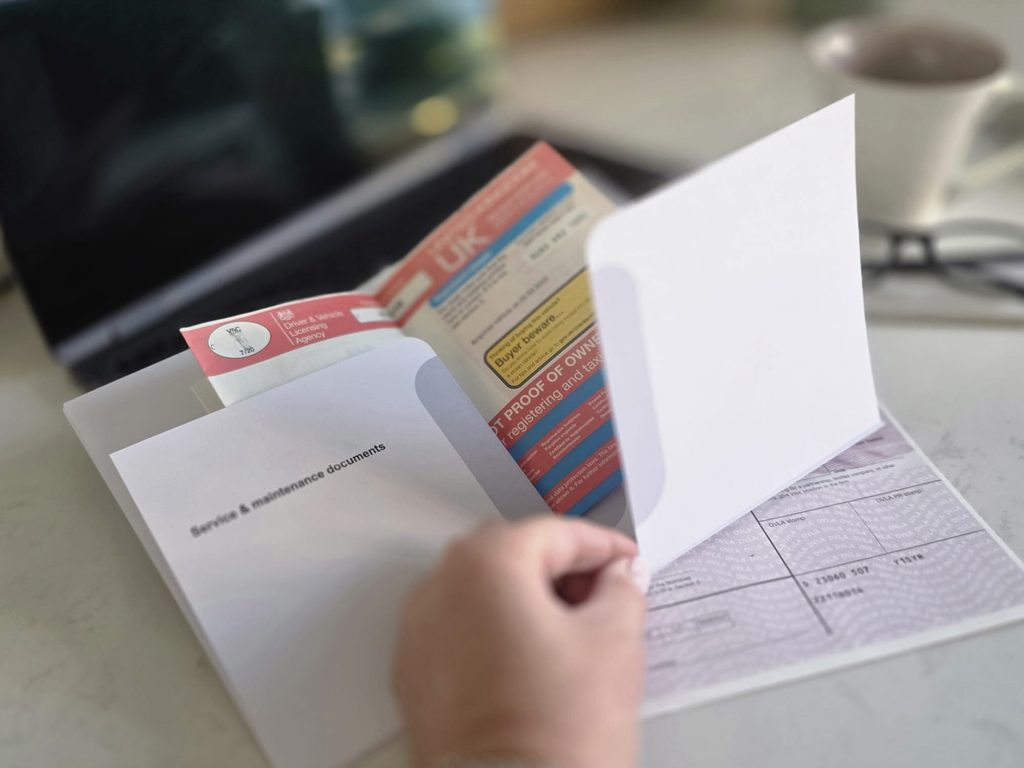
Want a simple way to keep your car’s service history together?
The jamjar Vehicle Service & History Record was designed for exactly this purpose.
Record servicing and maintenance as it happens, keep your supporting invoices and receipts together, and gradually build a clearer history of your vehicle throughout your ownership.
View the jamjar Vehicle Service & History Record
Record maintenance as it happens
One of the easiest ways to lose a vehicle’s history is to tell yourself you’ll organise everything later.
A service invoice goes into the glovebox. A tyre receipt stays in an email. Another garage sends an invoice as a PDF. Six months later, remembering what happened and when becomes surprisingly difficult.
A much easier habit is to update your service record whenever work is carried out.
After a service or significant repair:
- record the date and mileage;
- note what work was carried out;
- record the garage or service provider; and
- keep the supporting invoice or receipt.
That’s really all the system needs to be.
If you receive paperwork digitally, keep the original file. If you receive an important paper invoice, you may also want to photograph or scan it as a backup.
The important thing is that your main service record and the evidence supporting it stay together.
Do this as the work happens and your car’s history effectively builds itself.
Don’t forget maintenance outside the annual service
A vehicle’s ownership history is broader than its scheduled servicing.
Important maintenance can take place between services, and keeping a record of it can help explain both the condition of the car and when significant components were replaced.
Useful examples include:
- tyres;
- brake discs and pads;
- batteries;
- timing belts or chains where applicable;
- clutches;
- suspension work;
- major mechanical repairs; and
- manufacturer recall or warranty work.
Not all of these items form part of the car’s formal service history, but they can form an important part of its wider maintenance record.
Over time, this additional information can help create a much clearer picture of how the vehicle has actually been looked after.