


Say hello to the student-built coupe that cleans the air while it drives
Say hello to the student-built coupe that cleans the air while it drives
The Zero Emission Mobility (ZEM) has a built-in feature that captures CO2 and cleans the air while it drives
A team of university students has developed a prototype electric coupe designed not only to produce zero tailpipe emissions, but also to capture carbon dioxide (CO₂) from the air while driving.
The project, known as Zero Emission Mobility (ZEM), was created by students at Eindhoven University of Technology in the Netherlands. The concept explores whether future vehicles could play a small role in actively reducing atmospheric CO₂ during use.
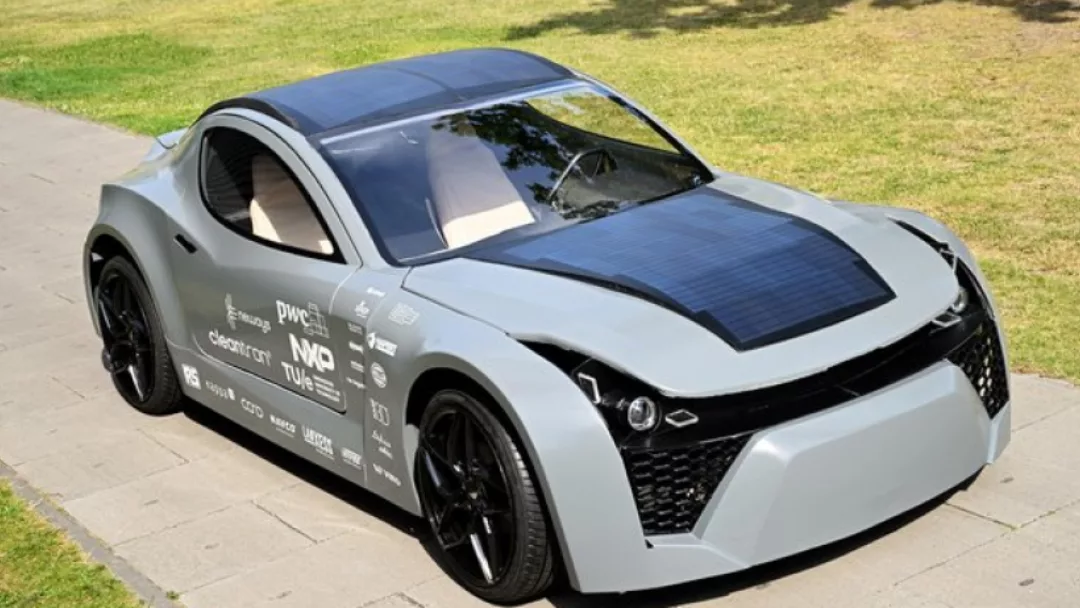
What Is the ZEM Prototype?
The ZEM is a two-seat electric coupe built as a proof-of-concept vehicle. Alongside its electric drivetrain, it features a carbon capture system designed to filter small amounts of CO₂ from the surrounding air as the car moves.
According to project estimates shared publicly by the student team, the prototype’s filters are capable of capturing a limited quantity of CO₂ over a defined driving distance. The aim is to explore how carbon capture could potentially help offset emissions generated during vehicle production and recycling.
It is important to note that the vehicle remains a concept and is not a production-ready model.
How Does the Carbon Capture System Work?
The system integrates replaceable filters within the vehicle structure. As air flows through the car during driving, CO₂ particles are captured by the filter material.
The current design is described as being in an early development phase. The students have indicated that increasing filter capacity and improving efficiency would be necessary for wider application.
At present, the captured volume is relatively small when compared to overall vehicle lifecycle emissions, but the project aims to demonstrate what could be technically possible.
Sustainable Materials and Design
In addition to the carbon capture element, the prototype also incorporates:
-
An electric powertrain
-
Recycled materials in certain structural components
-
Additive manufacturing (3D printing) techniques
-
A lightweight design approach
These elements are intended to reduce the environmental impact of production as well as operation.
Could This Become Mainstream?
While the ZEM project demonstrates innovation, scaling carbon capture technology for mass-market vehicles would present several challenges, including:
-
Filter storage and replacement systems
-
Energy efficiency considerations
-
Cost implications
-
Regulatory standards
The concept highlights how universities and research teams are experimenting with ideas that push beyond traditional electrification strategies.
As the automotive industry continues to evolve, developments such as battery efficiency, hydrogen fuel systems and carbon capture concepts may all play a role in long-term sustainability discussions.
If you’re thinking about switching to a battery efficient car, and you want some help on selling, feel free to check out our car selling guidance hub.
Final Thoughts
The student-built ZEM coupe is an example of forward-thinking experimentation in sustainable mobility. While still at proof-of-concept stage, it reflects ongoing efforts to rethink how vehicles interact with the environment.
Whether carbon capture becomes a practical addition to everyday cars remains to be seen. For now, projects like this help spark conversation about the future direction of low-emission transport.
If you’re reviewing your own vehicle in light of changing automotive technology, you can get a free, no-obligation valuation through our sell my car service.
Understanding your vehicle’s current market value can help you plan your next move with confidence.
With emission rules in mind, you can find out more about regulations, how it impacts affordability and the future of fuel-powered cars right here.


